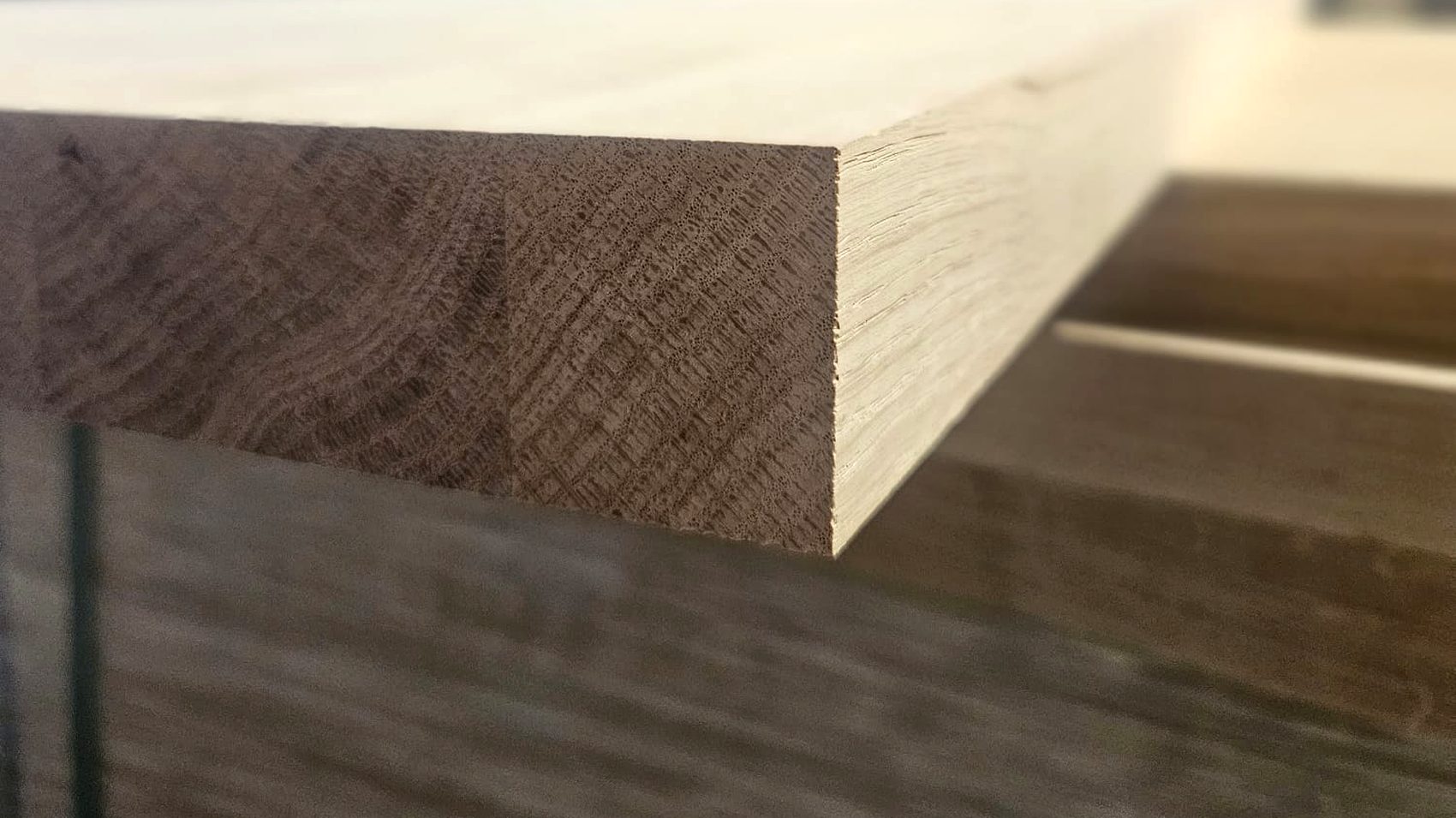
A hundred and twenty years of slow growth in flooded lowland forest, cut and graded by people who have done nothing else for generations. This is what makes Slavonian oak different — and how to buy it properly.
Pedunculate oak, Quercus robur, growing in the lowland forests along the Sava and Drava rivers — the Spačva basin in eastern Croatia and the forests that continue across northern Bosnia. It is the largest continuous stand of this oak anywhere in Europe.
The trees stand in ground that floods and drains with the seasons. They grow slowly and straight, with long clean trunks and tight annual rings, and they are not cut until they are well past a hundred years old. Everything the trade values about this wood follows from that.
It is not a brand and not a certificate. It is a species from a region, and it has been shipped west and south from here for as long as there has been a timber trade.
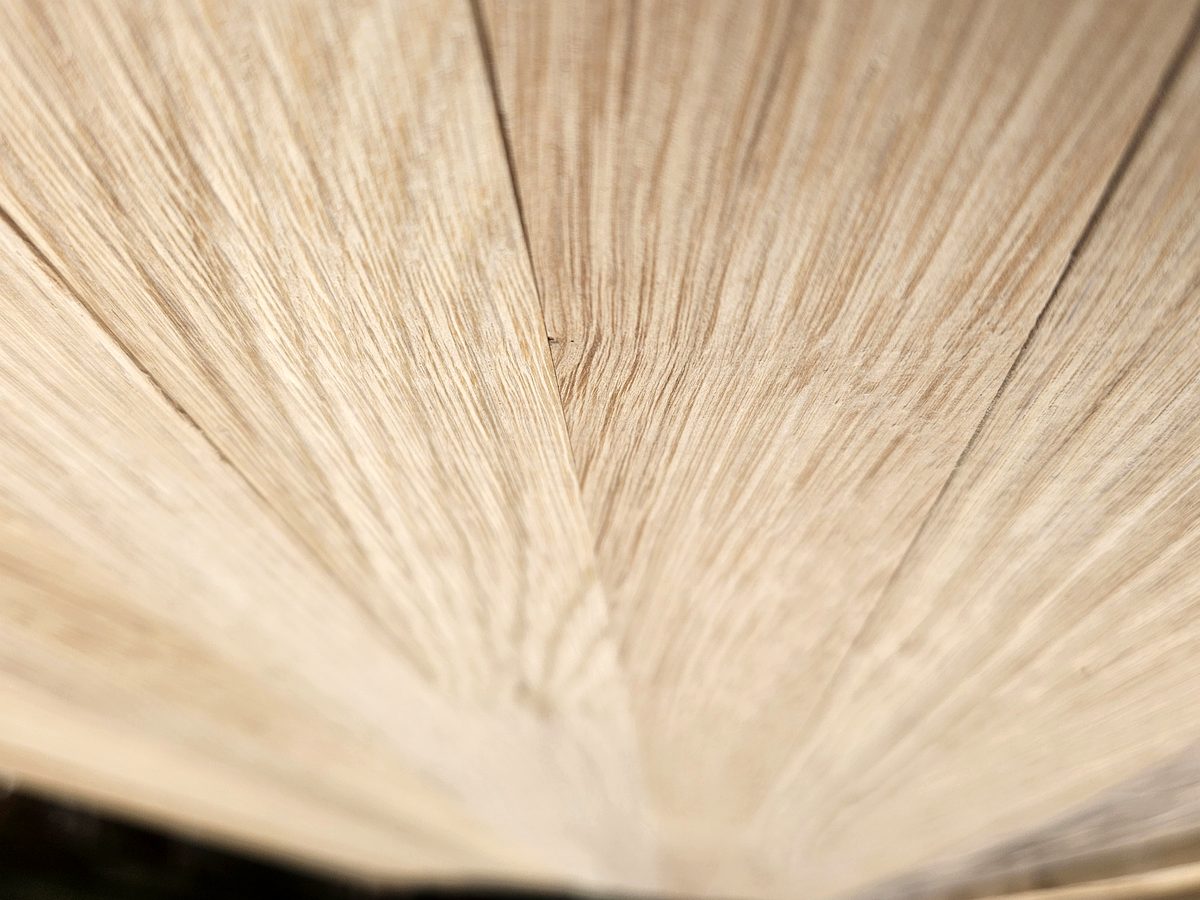
Oak is oak until you put two boards side by side. Then the differences are obvious, and they all come back to how slowly the tree grew.
Slow growth in heavy soil gives narrow annual rings and a fine, regular texture. The wood machines cleanly and takes a finish without blotching.
Light honey to pale straw, with little of the pink or grey cast found in faster-grown oak from elsewhere. Large surfaces stay calm instead of busy.
Dense, slow-grown timber moves less once it is properly dried. That is why it ends up in wide flooring boards, staves and table tops, where movement shows.
Cut radially, the medullary rays appear as silver flecks across the face. It is the most stable cut of the log and the most distinctive look in oak.
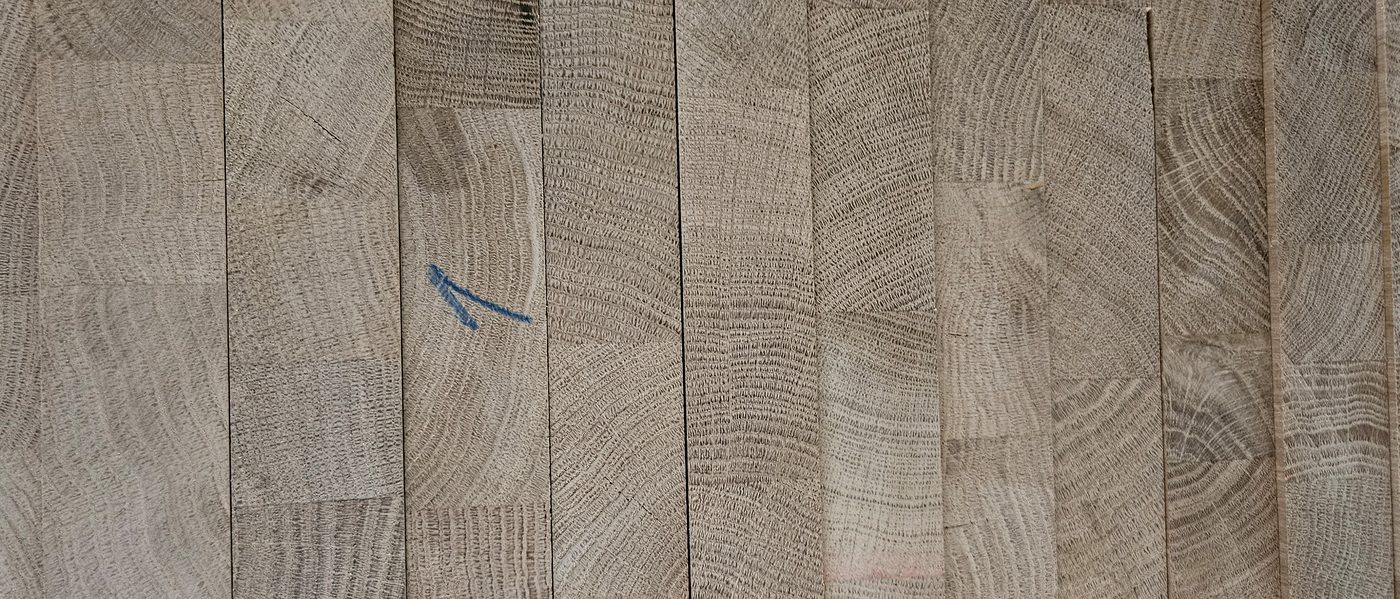
The same log can leave the region as a round log, as boards in sequence, or as a finished panel — and the further along it goes, the more of the value stays here. These are the forms it is traded in.
Sawlogs and veneer-grade logs, sold by diameter class and quality. The top logs go to veneer and cooperage; the rest is broken down at the mill.
The log sawn through and through, with every board kept in the order it came out. Grain and colour run across the whole set, which matters for table tops and matched panels.
Natural edge left on both sides, so the buyer decides where the yield goes. Common for joinery, wide tops and anyone cutting to their own plan.
Heavy sections for timber framing, structural work and landscaping. Oak of this density is still used where steel would be the easy answer.
The backbone of the trade. Fixed or free widths, sorted by grade and sapwood, stacked on stickers so the air moves evenly through the pack.
Cut radially so the rings meet the face near vertical. The most stable board the log can give, and the one that shows the silver ray figure.
Quarter-sawn and split for cooperage. Italian and French barrel makers have drawn on this region for generations, and the demand has not moved.
Cut to a finished list and ready to feed straight into production — elements for furniture and joinery, squares for legs and turning, strips for flooring and mouldings.
Planed on four sides and cut to final dimensions, ready to profile, glue or assemble without another pass through the machines.
Solid strips and top layers for engineered flooring. This is where most Slavonian oak ends up in Western Europe, under a finish, in somebody's house.
Edge-glued panels in full stave and finger-joint, for table tops, stair treads, worktops and furniture. The last step before the wood becomes a product.
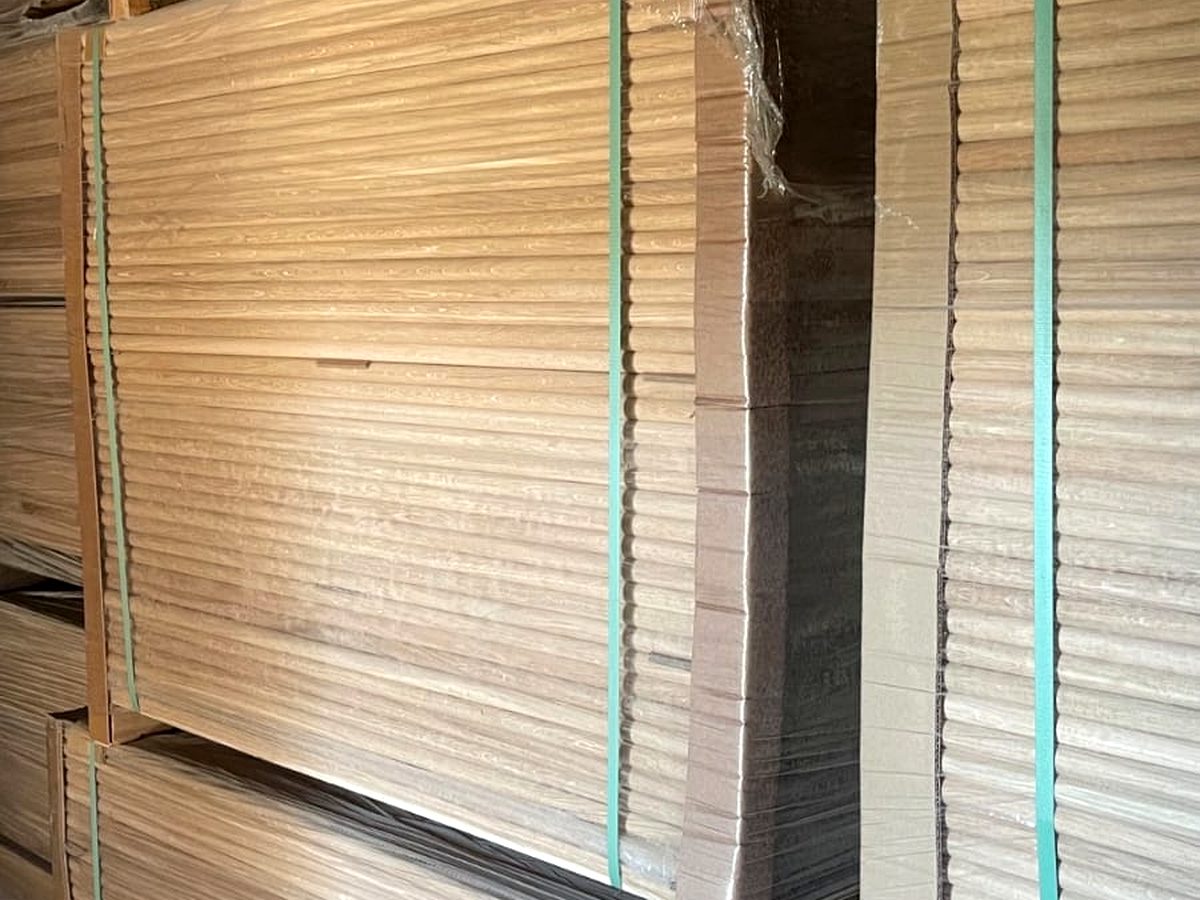
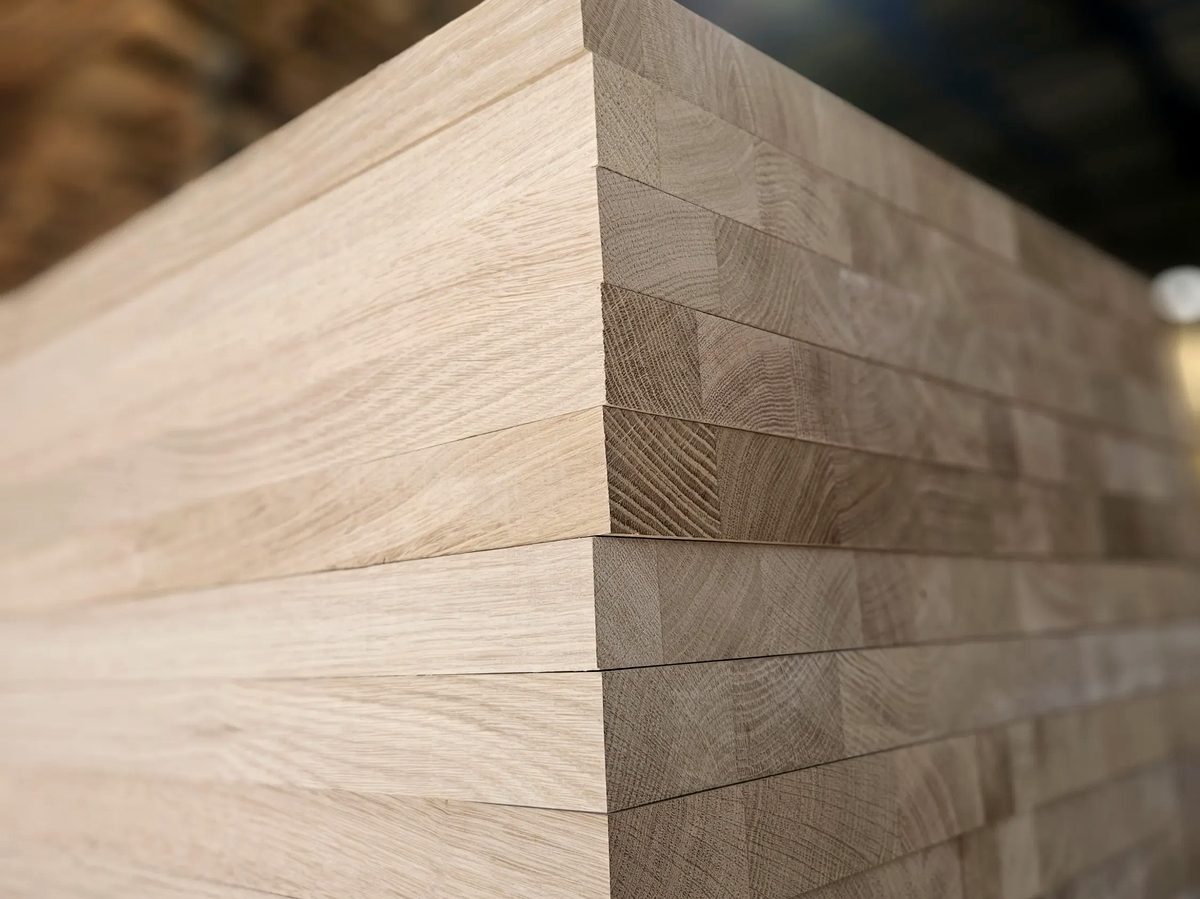
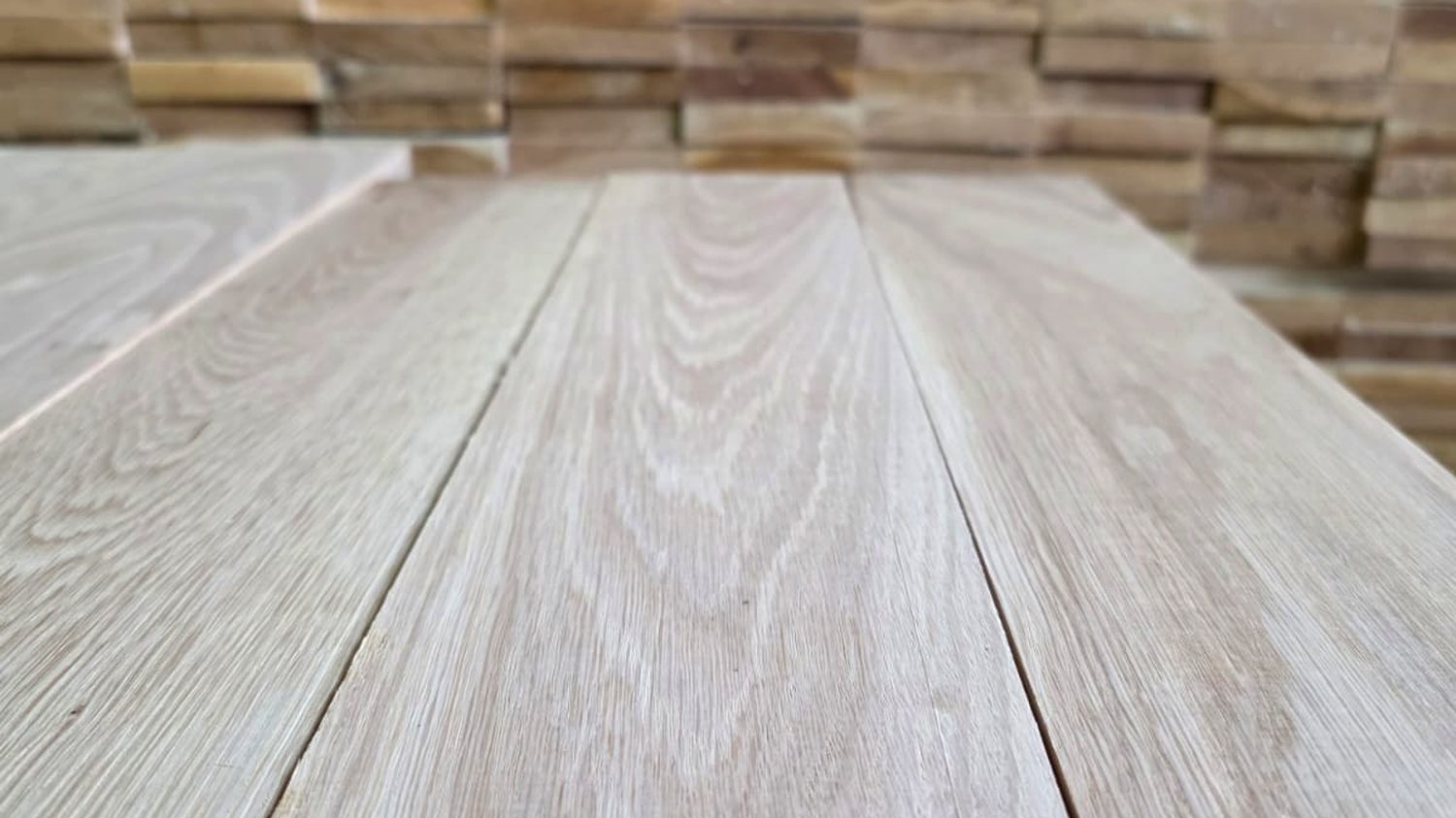
A board is QF2 in Belgium, AB in Croatia and No. 1 Common in the United States, and none of those names describe quite the same thing. Anyone buying oak across borders has to hold all of them in their head at once. Here is what they mean.
The European standard for appearance grading of oak. Boards are judged on the poorer face, by knots, colour, sapwood and structural defects. This is the language most continental buyers work in.
The top grade. Face virtually free of knots, even light colour, no sapwood unless agreed. Premium flooring, furniture fronts, panels where the surface is the product.
Clear with occasional small sound knots and slight colour variation. The workhorse grade for flooring, joinery and table tops.
Sound knots and visible colour variation across the face. Good yield for flooring, furniture parts and stair components — the grade most volume buyers settle on.
Larger and more frequent knots, pronounced colour and character marks, structurally sound. Rustic flooring, panels and joinery where character is wanted.
Full character. Large knots, colour variation and natural marks throughout. Rustic interiors, beams and cut-up applications where yield matters more than surface.
A mixed package — the natural run of grades from one batch, unsorted. Often the most economical way to buy volume.
Sapwood is a separate decision from grade: No sap · X, limited to one side · XX, unlimited.
The shorthand used across Central and Eastern Europe and by many parquet and furniture buyers in the West. A convention rather than a standard, so the letters shift slightly from seller to seller.
Clear face, no sapwood, even colour. Roughly equivalent to QF1a.
Mostly clear with occasional small sound knots. Sits between QF1b and QF2.
Sound knots and colour variation across the face. Roughly QF2 to QF3.
ABC is a mixed lot spanning the range. C is rustic and industrial: large knots, full colour, structurally sound.
Because the letters are not standardised, always agree them against samples before the first load.
The US system works differently: rather than judging the board as a whole, it measures how much clear cutting can be taken out of it. Buyers running American white oak alongside European oak usually want both described the same way.
Firsts and Seconds. Both faces yield at least 83⅓% clear cuttings, on long and wide boards. The export grade for furniture and joinery.
FAS on the better face, No. 1 Common on the reverse. Selects is the same quality on narrower and shorter boards. Used where only one side is seen.
At least 66⅔% clear cuttings. The cabinet grade — the standard for furniture and cut-to-size production.
At least 50% clear cuttings. The flooring grade, and good value for small parts and strips.
Flooring is graded on how the finished floor looks rather than on the sawn board, so the same package can carry a different name here than in the timber grades.
Clean, uniform surface. Minimal knots, tight colour range, no sapwood. For calm floors and large open areas.
Small sound knots and moderate colour variation. The most widely sold appearance, and what most people picture as an oak floor.
Knots, colour and natural marks fully visible. Warm and busy, used for character interiors and wide planks.
Everything the log gives, sorted only for soundness. Strong visual movement and the best yield per cubic metre.
Exact limits are agreed per contract, with samples before the first load. Whatever grade name ends up on the paper, the sorting behind it should not change between loads.
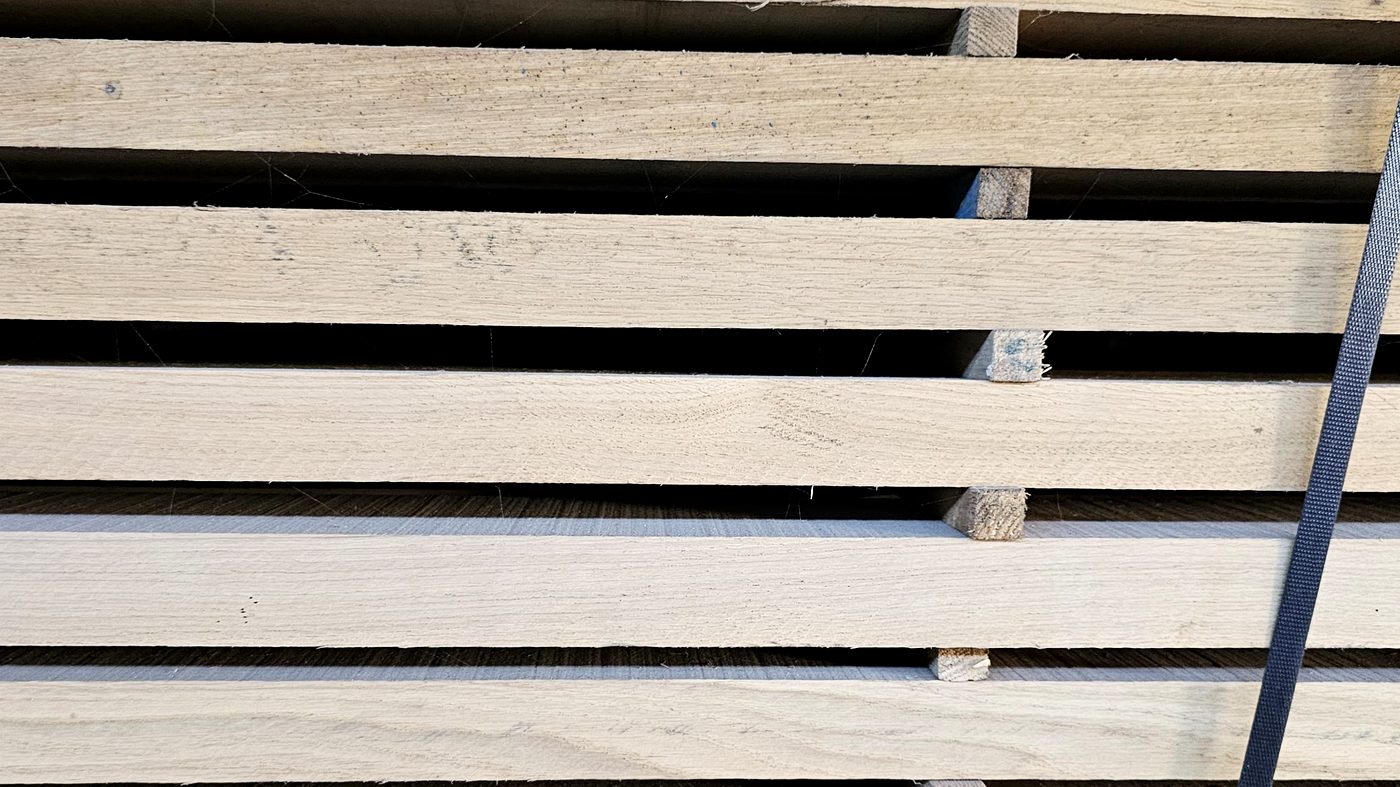
Most problems in an oak contract are visible before the truck is loaded, if anyone bothers to ask. These are the questions that separate a good supplier from an expensive lesson.
Ask for the specification before you ask for the price.
Not "A quality" — the system, the grade within it, and which face it is judged on. Get it written on the contract.
The single most common dispute in oak. No sap, one side, or unlimited — decide it separately from the grade.
And to what moisture, measured how, and when. A pack that left the kiln correct can still arrive wrong if it sat outside.
Piece by piece or by pack, gross or net, and who measures. Ask for the pack list with lengths and widths, not a single figure.
Photographs of the actual packs before loading. A supplier who will not send them is telling you something.
Oak from this region comes out of state-managed forests and the paperwork exists. It should reach you with the delivery, not after three reminders.
Italian cooperages have used oak from these forests for their large casks for generations. French and Belgian workshops take it for flooring and joinery. Most of the volume today leaves as boards, elements and lamellas heading for flooring lines across Western Europe.
It travels by truck into the EU and by container beyond it, and the paperwork that follows it matters as much as the wood itself.
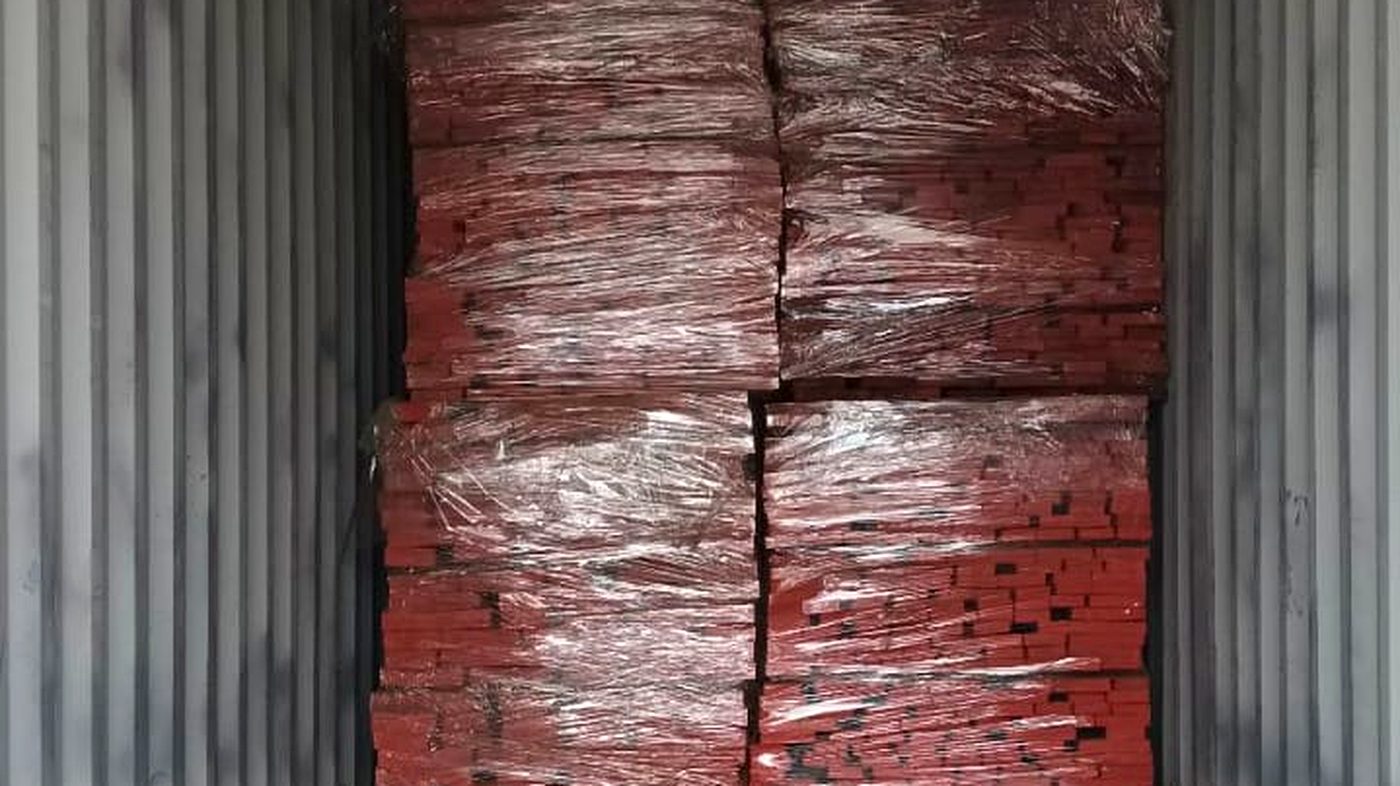
We buy and sell it for a living — logs through to finished panels, from a network of sawmills in Slavonia and northern Bosnia. Tell us what you run and we will tell you plainly whether we can supply it.
Prices are quoted EXW or FCA, per m³, excluding VAT. Reverse charge applies for EU VAT-registered buyers.